Tuesday, 19 August 2014

Wicca Man of Blundellsands


Perhaps the oddest son of Blundellsands, an affluent area of Sefton near Liverpool, was Gerald Brosseau Gardner.


He was born on Friday 13 June 1884 into a wealthy merchant family of teak and mahogany importers. Indeed, Joseph Gardner & Sons were reputed to be the world's first and largest importers of tropical hardwoods.


His early years were spent at "The Glen" which still stands on The Serpentine commanding an unimpeded view across Liverpool Bay. His forbears included Mayors of Liverpool, an admiral and a peer. His grandfather was something of a local eccentric, given to disporting himself naked in public, but even so it would have been difficult to foresee, from these uber respectable beginnings, the strange future that would lie ahead for young Gerald.

Gerald Gardner was in later life to become one of Britain's most notorious occult figures.

He was not educated in the formal sense but was taught literacy by a governess and went on to become a voracious reader. He developed an interest in antiquarianism, archaeology and anthropology. A delicate child who suffered from asthma (the occultist's curse), he was sent in the care of his nurse to the East, where it was thought, the warm climate would cure his ailments. For many years it was here that he remained.
At the age of 16 he managed a tea plantation in Ceylon where he remained for nineteen years before moving to Borneo and later to Malaya where he became a Government Inspector of rubber plantations for thirteen years and later a Customs Officer.
During these years he became increasingly interested in native customs and tribal ritual; he absorbed himself in ethnic superstition, necromancy and magic. He had already developed a fascination with the pagan history of the Old World and to this he melded the mysticism of the East. He courted Buddhism, Islam and was twice a Freemason before becoming a confirmed Occultist who went on to establish his own religion when, upon retirement, he returned to England.


Once back in England he quickly established himself in occult circles and gained a reputation as a quirky but original author who wrote about the odd world he had come to inhabit. Not until 1951 was the Witchcraft Act 1735 repealed in England and consequently most of Gardner's early prognostications and revelations on the occult were cloaked in the guise of fiction. High Magic's Aid and Book of Shadows were two such.
Gardner was nothing if not an accomplished self-publicist: he gave frequent interviews to the press, radio and on at least one occasion to TV. Witchcraft Today and The Meaning of Witchcraft were his seminal works of non-fiction with which, after 1951, he enthusiastically promoted his views. In the 50's and 60's his Wicca religion gained a dedicated  following not only in Britain but in the USA and Australia also.

In 1939 Gardner had been initiated, by Edith Woodford-Grimes, into the New Forest Coven, which drew its energy from pre-Christian paganism. They would meet at "Old Dorothy's House". Old Dorothy is believed to have been Dorothy Clutterbuck, an otherwise respectable Church of England communicant. Gardner rose to a position of eminence in the coven and later adapted the Rosicrucian Order Crotona Fellowship to his own style, suffusing it with freemasonry, ceremonial magic and the writings of his contemporary Aleister Crowley, the self-styled Great Beast 666 himself.
Gardner's revisions were largely accepted because other members of the coven cravenly claimed to know him from a previous life; Gardner had long been a believer in reincarnation and claimed for himself an earlier existence in Cyprus in 1450.


The Great Cone of Power


In 1940, during WW2, England endured some of her darkest days. Invasion by Nazi Germany was, it seemed, only a matter of time. Gardner and the coven decided it was time to act.
On Lammas Eve, 31 August 1940, "skyclad", that is to say naked, the coven performed a ceremony in the New Forest: the Fuhrer who was poised to launch Operation Sea Lion had to be stopped. Gardner, by this time 56, and his elderly confederates invoked the psychic energy of the Cone of Power against the forces of Nazism.
Hitler it should be noted was himself a man of great superstition and the message: the channel cannot be crossed once implanted in the collective psyche of him and his cohorts would be irresistible.

The McLeod, Lord of Skye, had a similar plan in mind to forestall a German invasion. He planned in extremis to wave the Fairy Flag (Am Bratach Sith)  from the white cliffs of Dover. This flag possessed the power of victory just one last time having been used already on two previous occasions in McLeod clan history.

In channeling nature's elemental forces through their own mortal bodies it is said that two of Gardner's coven, Walter Forder and James Loader, went into a state of collapse from which they were not to recover.


The Cone of Power had twice before been called upon to defeat the enemy: in 1588 the Armada was thwarted and in 1807 it had been invoked to stop the advance of Napoleon.

Just as previously, the power of the Cone was to prove invincible.


Pronouncements


Gardner was never short of what we would today call a soundbite nor was he slow to grab the headlines.
He asserted that Grissell Gairdner burnt as a witch in 1610 was one of his forbears. He had a reverence for the Royal Family, mainly because he believed them, like himself, to be descended from a long line of witches.
Whether they were flattered or merely amused is unknown but it is known that Gardner was invited to a reception at Buckingham Palace in 1960.

Fairies, he declaimed, were a persecuted race of pygmy-witches.

He claimed that Aleister Crowley, a long-time rival and altogether more sinister figure, had accepted him as heir apparent when he visited him shortly before his death on 1 December 1947. He was initiated into the Ordo Templis Orientis (OTO) in a testament hand-written by Gardner but signed by Crowley. Upon Crowley's death he proclaimed himself leader of the OTO in Europe and was apparently accepted as such.


Aleister Crowley, wickedest man in the world.jpg    Aleister Crowley


Later Years and Death


August 1940 might have been the apogee of Gardner's illustrious career but he was to continue for some years yet. With age he became even more outre: by this time his body bore numerous occult tattoos, he wore a weighty bronze bracelet inscribed with symbols denoting the three degrees of witchcraft and a large silver ring bearing his Wicca name Scire in letters of the ancient Theban alphabet. His beard was groomed in barbiche style while his hair was combed into two vertical peaks.

In 1951 he moved to the Isle of Man where he declared himself Resident Witch of the Island. Here with Cecil Williamson he opened in Casletown the Folk-lore Centre of Superstition and Witchcraft. This clumsily named enterprise soon ran into financial difficulties and Gardner eventually bought out Williamson who subsequently opened the rival Museum of Witchcraft in Boscastle, Cornwall. The Castletown Centre survived until after Gardner's death.


Witches Mill Museum in Castletown.


On 12 February 1964 Gardner died at the age of 79 while on board the Scottish Prince returning from the Lebanon having suffered a sudden heart attack at the breakfast table. He was buried with only the ship's captain present. His body lies interred in a cemetery in Tunis.

Gardnerian Wicca lives on with a claimed one million adherents in 66 countries of the world.

Links:

http://plus.google.com/+ColinMcIndoecolmacro48/posts


Friday, 25 July 2014

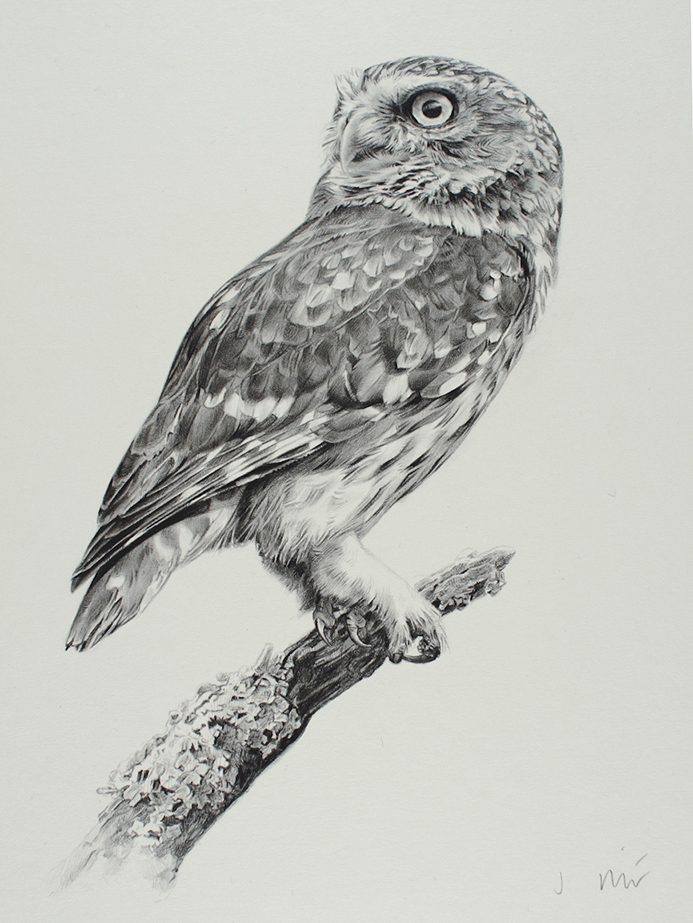
The Curious Case of the Little Owl

Can any bird claim so illustrious a place in history and legend as the Little Owl, Athene noctua?


The Little Owl is the smallest of the British Strigiformes. It is a plump bird, about the length of a mistle thrush, with a flat head and pronounced whiteish eyebrows which can give it a stern, censorious appearance.

It inhabits all but the colder parts of Europe and Asia as far east as the Korean peninsula. It is also present in parts of North Africa and Arabia. As if to emphasise its adaptability, the Little Owl has also been established in New Zealand. Nor is is it native to Britain. It was first introduced in 1842 by Thomas Powys and in the succeeding decades further introductions were made. Since the turn of the nineteenth century it has become a successful breeding bird in all counties of England and Wales and is now breeding in the Scottish Lowlands also.

As a "no status" bird, conservation groups take a rather stuffy view. The British Trust for Ornithology (BTO) has asserted that "as a non-native species we do not consider it to be of conservation value". Mark Avery, formerly conservation officer of the RSPB has said that he "probably wouldn't be very keen on an introduction like this nowadays" before admitting "I don't know of any harm done to  our native fauna by the Little Owl". It is truly native, of course,  just 20 miles away across the Channel!

Nesting takes place from about mid April to June often in pollarded trees or in derelict buildings though crevices or even rabbit burrows may also be used. Typically 3-5 eggs are laid with incubation lasting about four weeks; at about 35 days old the young fledge.
Territories frequently remain occupied throughout the year.
Beetles, grasshoppers and earthworms form the dietary staple but lizards, frogs and small birds are taken when the opportunity presents.


Image result for little owl eggs

According to Greek Mythology, Athene, Goddess of Wisdom, was so impressed by the sagacity of the Little Owl that she conferred upon it the honour of noblest of all birds. Its watchfulness, implacability and wraith-like ability to arrive unobserved was without equal. The Little Owl's  taxonomic name, Athene noctua, recalls the unique distinction which the Olympian goddess of war, commerce, wise counsel and heroic endeavour deemed befitting this small owl.


Athenian tetradrachm of 5th century B.C.


Athenian tetradrachm of 2nd century B.C.


The Little Owl possessed a supernatural "inner light" which gave it not only an ability to see in the dark but also the power of prescience: the ability to see into the future. It was, and still is, a familiar sight around Greek classical temples and this served to strengthen the perception of the Little Owl in the everyday lives of the Ancients both as guardian and as foreteller of danger.

Equally in the commerce of peacetime as in the perils of war the Little Owl was a potent omen. If Athenian soldiers sighted it on the eve of battle they were emboldened in the knowledge that they could not be defeated.

Oddly it seems that the converse was true if one were to dream of the Little Owl. The second century Roman soothsayer Artemidorus  warned that this foretold a shipwreck: sailors would desperately seek an anchorage and traders would see this inauspicious sign as reason to put off their bargaining for another day.

Like Athene before her Minerva, the Roman Goddess of Wisdom, was similarly to adopt the Little Owl as her chosen companion. The Athenian owl legends would gain new currency this time with Minervan provenance.
These legends are recalled in the present day name for the Little Owl in Sweden: Minervauggla; in Finland it is known as Minervanpollo.

Just as for the Greeks, the Little Owl, gifted with the power of divination, was the most ominous of birds: its appearance foretold the deaths of Caesars Augustus, Commodus Aurelius and Agrippa. Most famously perhaps, as Shakespeare reminds us, it  also announced the imminent death of Julius Caesar:


"...yesterday, the bird of night did sit Even at noonday, upon the market place, Hooting and shrieking". 


In Roman mythology Proserpine (Persephone) was consigned to the underworld where Ascalpus reported her as eating the forbidden fruit of a pomegranate. He expected to be rewarded for this piece of intelligence but was instead turned into an owl, a "loathsome bird".

In contrast to Greek beliefs, a Roman army would regard the sight of an owl before battle as a harbinger of disaster. At Carrhae on the ancient plains of Mesopotamia the appearance of the Little Owl presaged a most inglorious day. Here in 53 B.C. the army of the Parthian Empire inflicted an humiliating defeat upon the invading force of Romans, who, though superior in numbers, were put to rout by the Parthian cavalry. The Roman commander Crassus was killed and the surviving members of his army were enslaved.

This was to endure as one of Rome's most crushing defeats.


Modern science has demystified much of the lore surrounding the Little Owl and indeed owls in general but to hear its call at night or to meet its gaze still, in me at least, invokes a sort of primal response.
One English superstition had it that in order to negate the baleful effect of an owl observing you, you should walk around and around the tree in which he sat in order that he may wring his own neck.

In Britain, as recently as the eighteenth century, owls would be nailed to barn doors to protect livestock from curse, lightning strike or similar misadventure.

Birds of omen dark and foul,
Night-crow, raven, bat, and owl,
Leave the sick man to his dream --All night long he heard your scream.

-Sir Walter Scott


In many societies owls are still associated with death and even in the West the notion of the "wise old owl" retains its currency.


Although severely  affected by bad winters the Little Owl is a species of "least concern".


Photographs (all taken in Sefton) remain copyright of C McIndoe.

Link:

http://plus.google.com/+ColinMcIndoecolmacro48/posts


Thursday, 3 July 2014

A Tale of Two Crosbys


The villages of Great Crosby and Little Crosby, separated by less than a mile of farmland, have developed their own discrete and distinctive personalities over the centuries.


It was the best of times, it was the worst of times, it was the age of wisdom, it was the age of foolishness, it was the epoch of belief, it was the epoch of incredulity, it was the season of Light, it was the season of Darkness, it was the spring of hope, it was the winter of despair, we had everything before us, we had nothing before us, we were all going direct


to Heaven, we were all going direct the other way. . . .


Dickens's use of the repeating phrase, or anaphora, for rhetorical impact is displayed to fine effect in the opening lines of A Tale Of Two Cities. He reverts to this same form in the concluding chapter when Carton, the dissolute but brilliant lawyer, meets his death on the guillotine.


In the Bastille

It is a far, far better thing that I do, than I have ever done; it is a far, far better rest I go to than I have ever known.


In the death of Sydney Carton, Dickens creates a thinly veiled Christian synthesis: Carton, whose earthly life had been one of ennui and lack of purpose, relishes his end as both noble and salvational. He is certain that his enduring name will be "glorious" when he finds his rest in Heaven and is equally sure that Paris will rise from its bloody abyss to become a "beautiful city and a brilliant people".
Dickens imbues Carton, at the end, with a purposeful almost Messianic mindset which sees him embrace his fate with a serenity and a conviction as he casts off the louche excesses of his past.


The Spy's Funeral

The injustices in English society exacerbated by class, poverty and discrimination never led to a popular uprising quite so tumultuous as in France of 1789. But social tensions there were all the same and it was the popular uprising on the one hand and the contrasting grudging endurance of the English underclasses on the other which informed Dickens's great work.

In the century and more before the time of the French Revolution, the people of Great Crosby and more particularly Little Crosby had their own deeply divisive issues. The majority of people in Great Crosby and the farms and villages of the district embraced the new orthodoxy of the Church of England. Of course local sentiment would have reflected national sentiment and in Elizabeth I's reign the threat of the Counter-Reformation and conquest from Catholic Europe was at its highest. In spite of this the villagers of Little Crosby, like the Squire, remained stubbornly loyal to the "Old Faith".
The Church of Rome had vowed to crush Protestantism and the threat of invasion from Philip II's Spain was a terrifying one. In 1588 the Armada sailed and Elizabeth I delivered her stirring Speech to the Troops at Tilbury:

I know I have the body of a weak, feeble woman; but I have the heart and stomach of a king, and of a king of England too, and think foul scorn that Parma or Spain, or any prince of Europe, should dare to invade the borders of my realm; to which rather than any dishonour shall grow by me, I myself will take up arms, I myself will be your general, judge, and rewarder of every one of your virtues in the field.


The Armada as we all know was defeated but suspicion of those whose first allegiance was to the Catholic Church was, if anything, heightened and Catholicism was to many synonymous with plot and treason. Discrimination against those who remained faithful to the Church of Rome was common and this was understandably a major source of resentment for the recusants who continued to conduct their masses in secret and suffered imprisonment, land sequestration and fines as a consequence.

In 1590 Richard Blundell was seized upon the orders of the Earl of Derby and died in Lancaster prison on March 19th 1592.
His son and heir William Blundell was similarly imprisoned as was his wife in Chester Castle and she bore or at least nursed a son while incarcerated.
At the time of the Civil War Charles I attracted many Lancashire Catholics to his cause. One such was William Blundell whose leg was shattered by a musketball at the siege of Lancaster Castle. Many years later on June 30th 1694 at half past five in the morning three messengers of the King arrived to arrest William (the Cavalier) Blundell on suspicion of his having been involved in a popish plot. They found a sick and lame old man of 75 and so arrested his son instead. He was subsequently committed to Newgate Prison.
The arrests, fines and harrassment went on for generations and many Catholic families were reduced to beggary but against the odds the Blundells of Little Crosby managed to cling on to their faith and to their estates. To this day the 60 houses in the village remain owned by the Estate.


During the reign of Elizabeth I and for some considerable time afterwards those who clung to the "Old Faith" were denied burial in the cemetery of Sefton Church which since 1170 had been their place of final rest. Often the dead were interred in gardens.
Similar situations arose up and down the country and in Gloucestershire rioting and loss of life had resulted. The parson of St Helen's, Sefton at the time was a particularly recalcitrant character. His name (and this may seem apt) was the Rev Nutter.
His excess of zeal was such that it earned him the scorn of Queen Elizabeth herself.


In December 1610, the vicar of St Helen's church, Sefton refused the burial of a local woman, and her relatives and friends interred her body in a shallow grave close by a lane near to some common land. Unfortunately, the body was disturbed and desecrated by hogs which grazed on the common land. #


"Were best to make readie in this village of Little Crosbie a place fitt to burie suche Catholiques either if myne owne howse or of thr Neighbourhoode as should depte this lyfe duringe the tyme of these trobles.

- William Blundell of Crosby Hall (1560-1638)

  The Harkirk from an old Painting

The refusal to allow recusants a decent Christian burial constituted a very considerable problem for the Catholics of Little Crosby and further beyond. In response it was decided that Harkirk, an ancient burial ground, would be re-consecrated. The first burial here was on April 7th 1611; the last burial at Harkirk was on November 27th 1753. In all 131 people are buried here.
In 1889 Nicholas Blundell (1811-1894) built a small chapel on the site.

Today, perhaps anachronistically, Little Crosby remains a predominantly, if not wholly, Catholic village rooted in a turbulent past but living in a more harmonious today.


The ancient cross in the village centre of Great Crosby surmounts the site of St Michael's well.


St Michael's Well


The wayside cross in Little Crosby also stands on the site of a well.

Little Crosby Cross


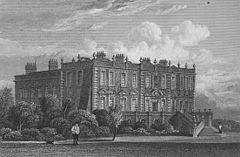
Crosby Hall, the Blundell family home, was built in 1609 and remodelled in Georgian style in the 1780's.


Crosby Hall


Acknowledgements:
# - from transcript of mass held at Harkirk 2001.
Photographs of crosses remain the copyright of Paul R Allerton.
View of Crosby Hall originally published in Lancashire Life magazine.
Other photographs copyright of C McIndoe.

Link:

http://plus.google.com/+ColinMcIndoecolmacro48/posts


Friday, 30 May 2014

Some Sefton Rambles


The place name Sefton is of Saxon origin and is descriptive of the low-lying land of the parish which in earlier times would flood every winter. The name might be translated as settlement by the sedges or rushes. After the Norman Conquest this land was conferred upon William de Moline or Molyneux and the Sefton (or Moline) cross, which now serves as the logo for Sefton Metropolitan Borough, was the heraldic emblem of the Molyneux family.


Early representations of the Moline Cross can be seen carved in the entryway to St Helen's Church in the old village of Sefton.


 Sefton lies on the river Alt which in former times was a more substantial waterway than we find today. It was navigable as far as Croxteth, a ninth century Norse settlement about nine miles upriver, where in 1575 Molyneux, by this  time Earl of Derby, moved into the newly built Croxteth Hall. This remained the family seat until 1972 when the seventh and last earl died. At this time the estate was acquired by the city of Liverpool .


River Alt at midsummer sunrise.


The norse name Croxteth derives from Croc's Staithe or landing place and many other place names in this part of south west Lacashire bear witness to the viking influence in this area. When the nearby M62 motorway was being built in 1975 evidence of this of this was confirmed when the remains of a viking longboat were uncovered during earth moving at theTarbock exit.


 Over recent centuries the meadows of the Alt plain have undergone significant improvement and former peat mosses are now good quality agricultural land. Even so, until the construction of floodgates at Altmouth in 1830 the river remained tidal as far as Showrick Bridge by Sefton village and even with the present complex nexus of drainage ditches and pumping stations the Alt can still be capricious. As Alison Maddock in her 1999 study asserted: this "small river [bears] influence on life and livelihood in the area out of all proportion to its size".


In the last couple of years and after prolonged debate a radical flood prevention scheme has been implemented. This has involved the surrender of improved farmland in favour of the creation at Lunt Meadows of 70 hectares of permanent reedbed and floodplain grazing marsh. This is designed to alleviate the threat of flooding to the nearby township of Formby by allowing the Alt to overspill in a managed way as and when the situation demands. At such times a significant diversion of the river might be achievable. When the Environment Agency has completed its work, the management of Lunt Meadows will pass to Lancashire Wildlife Trust.


In my lifetime a wetland area of similar size, immediately adjacent, was used as rubbish landfill; this has in the last two decades been planted with broadleaf trees as  part of the Mersey Forest project and now forms a pleasant addition to the local ecology. Ironically, however, this seems to demonstrate the short-sightedness of planners who destroyed the original watermeadow system only to realise immediately afterwards the essential function that this natural feature had been fulfilling.


The landscaping of  Lunt Meadows Wetlands proved interesting indeed. A hundred meters or so from Showrick Bridge, an ancient crossing place, a Mesolithic site was revealed. This might be thought remarkable enough all ready, perhaps, but this site challenged the received wisdom of how Mesolithic society had been organised. It was previously thought that Mesolithic man lived a hunter-gatherer existence which involved no settled dwellings but the 7,800 year old remains, found at Lunt, showed that Mesolithic society was a great deal more socially organised than previously had been thought. Evidence of three permanent structures was found which reveals that a settled community of three or so families had in those days established themselves here and returned at least seasonally over a period of time. The archaeologist in  charge of the find, Dr Ron Cowell, explained how this demonstrated that our forbears at this time were not the constantly moving nomads we had previously assumed them to be and confirmed the evidence of similar finds at Howick in Northumberland and near Scarborough in Yorkshire.


In the springtime of the year the wildflowers and birdsong of this tranquil place are spellbinding.


All photographs copyright of Colin McIndoe.
Feedback, comments and interesting links always welcome.

Links:

https://www.flickr.com/photos/formbycivicsociety/8744314477/
http://www.theguardian.com/science/2012/nov/19/stone-age-nomads-merseyside-dwellings
http://www.bbc.co.uk/news/uk-england-20344575
http://megalithix.wordpress.com/2011/03/23/st-helens-well-sefton/

http://plus.google.com/+ColinMcIndoecolmacro48/posts


Tuesday, 20 May 2014

Sea and Shore

 The beach at Formby is the only accredited bathing beach in Sefton these days but in former times Crosby Seabank was a favourite bathing resort. Two hundred years ago at the south end of Bath Street, in what is now Waterloo, bathing machines were stationed. A little more recently in my childhood, swimming in the sea was a regular summer pastime and I still have an occasional  dip in the sea at Crosby at what is now termed  Another Place where the Anthony Gormley  iron men now stand vigil.

 Waterloo of course derives its name from the battle of 1815 and Wellington Street and Blucher Street recall the names of the victorious generals as does Picton Road; Lt Gen Thomas Picton fell leading a bayonet charge. He was the most senior British officer to die in the Battle of Waterloo. Interestingly, the adjacent Murat Street celebrates a French adversary who, if memory recalls, was not actually present at the battle. The nearby Regency terraces which look out across the Mersey estuary to the Welsh Hills were  the homes of merchants, shipping magnates and their captains.

 One of these fine villas: 13 Beach Lawn, was the house where J Bruce Ismay grew up. Ismay was chairman of the White Star Line and just a few hundred yards away, first at number 4 and later 17 Marine Terrace, lived captain Edward J Smith.

 Smith was captain of RMS Titanic on the fateful night of 15 April 1912 when on her maiden transatlantic voyage she struck an iceberg shortly after midnight. Captain Smith, having exhorted his crew to "be British" remained on the bridge and went down with his ship as did over 1500 passengers and crew. Less well known is the fact that Joseph Bell, Chief Engineer, and all of the other engineers, stokers and trimmers stayed at their posts in the bowels of the ship in order to maintain the electricity supply essential to enable such evacuation as was possible knowing that for them it meant certain death. There is a plaque to the memory of Joseph Bell in St Faith's Church Crosby.

 Ismay, of course, survived. The British Board of Trade Inquiry into the loss of the Titanic heard that he boarded a lifeboat after being ordered by Fifth Officer Lowe, a fiery Welshman, to "get to hell out of here" when he opined that the lifeboats were being lowered too slowly. As Lowe replied in industrial language: if he were to work the davits any faster the boats would flip over drowning the lot.
 Villain or vilified?
 At least one lady passenger said she owed her life to Ismay as it was upon his insistence that she and several other women took to the boats. Whatever the truth, Ismay was forever afterwards a diminished man ; reviled as a coward, he was shunned by his peers even though he was exonerated by the disaster inquiries on both sides of the Atlantic. He died a broken man in 1937.


 In October 2008 I watched from the shore as the great Cunard liner QE2 made her valedictory voyage out of Liverpool and as she passed Beach Lawn, she sounded her siren in salute just as previous Cunards and White Stars had done before her.


 To return to the present: the beach and hinterland at Formby, just 11 miles north of the city, remain largely unchanged and amazingly tranquil places. It is at Formby Bar that ships leave the river and begin their sea voyages. Here, the massive expanse of shore gives way to huge sand dunes, wet slacks and Corsican pines. Local people will attest to the microclimate enjoyed by this stretch of coast reaching roughly from Formby Point southward to the docklands at Seaforth where the Port of Liverpool has its head office and north to the Ribble Estuary. This microclimate supports an astonishing array of fauna and flora which bear testament to the kindly conditions of this special littoral all of which offers much to discover.


.

The Red Squirrel still manages to sustain its enclave in the pinewoods at Freshfield and is even beginning to extend its range. Natterjack Toads and Sand Lizards are also thriving even though much of their habitat has been lost in the postwar years. The Sand Lizard is particularly interesting as this is a relict population usually more at home in the heathlands of the south of England and in mainland Europe.
There are in excess of 1000 vascular plants in the dunes of Sefton; these dunes account for some 20% of England's total sand dune habitat. Dune Helleborine, Isle of Man Cabbage and Lesser Hedge Bindweed roseata are three of the rarest. The Biodiversity Audit of Northwest England (1999) lists for the Sefton coast no less than 145 plants of "conservation importance".

The intertidal sands and muds of the Mersey estuary provide a nationally important habitat for many tens of thousands of waders particularly during the migration seasons. Flocks, thousands strong, of Dunlin put on great aerial displays: swirling and turning and seeming to disappear only to reappear again. The spectacle is reminiscent of a shoal of reef fish or maybe of a bee swarm. Just three weeks ago I was looking out on the shore at low water and watched several  thousand Black-tailed Godwits which had dropped to feed opposite Crosby Coastguard Station. By the return of the tide they had all flown off again on the next stage of their journey to their northerly breeding grounds.
Every winter some 30 thousand Pink-footed
Geese arrive to feed on the surrounding mosslands and when tidal conditions are right they roost at night in huge numbers on Taylor's Bank opposite the mouth of the Alt. The sheer variety of seabirds, waders and species of duck on the shore and associated waters can be quite amazing. Each season and each change of weather introduces something different.


Hope you enjoy.
All photographs copyright of Colin McIndoe.

Links:

www.dalswildlifesite.com
lancswt.org.uk
freewebs.com/merseybirders
www.mnapage.info
www.merseyestuary.org
birdblog.merseyblogs.co.uk
https://sites.google.com/site/livbotsoc/
www.merseysidebiobank.org.uk

http://plus.google.com/+ColinMcIndoecolmacro48/posts